In February 2023 my wife (then fiancé) and I moved from Cape Town, South Africa, to Ho Chi Minh City, Vietnam. It was the biggest challenge I have ever faced, and the most rewarding experience all at once. After the arduous process of getting settled into an apartment, applying for a residence card, and finding our feet at work, it was time to do some exploring. It was decided that we would visit Nha Trang with my cousin although a missed flight, visa troubles, and some bitter disappointment resulted in him not joining us. We pivoted and found ourselves at a bus station in Bình Thạnh district trying to piece together how we were going to get to our new destination, Nam Cát Tiên. A national park that lies beyond the turgid waters of the Đồng Nai River. We were having little success finding our bus despite being almost 70% sure we were in the right place. Eventually I made myself understood clearly enough to an attendant who directed us to a booking counter where we were told that this was the wrong bus station entirely. A 40-minute taxi across the city corrected this error and with rising certainty we boarded a small local bus and departed.
Checking google maps asserted that we were in fact headed in the correct direction and so we relaxed and soaked up the views of the shifting landscape of the Vietnamese countryside. The bus was running a chaotic multi-purpose operation, transporting folks to their countryside hometowns, delivering goods, and ferrying two foreigners to a national park. The bus driver seemed cool and collected as he chain-smoked his way through the nightmarish traffic of the city and out into the provinces while his partner ran up and down the aisle alerting people to their stops and hauling the deliveries in and out the door. Hardly a relaxing cruise we were squashed between the bus’s full capacity for humanity, all sorts of goods, and a large cardboard box filled with live chicks that did not stop tweeting incessantly for the entire journey. Eventually however we made it. With a curt grunt the driver announced that this was the place. He pointed up a dirt road before dropping us off next to a small kiosk amongst some stalls peddling hats and snacks. We could see the strong current of the river up ahead beneath an arch which asserted that this was in fact Nam Cát Tiên. Following the dirt track, we made it to the Green Bamboo Lodge, a place that has become a firm favourite of ours.
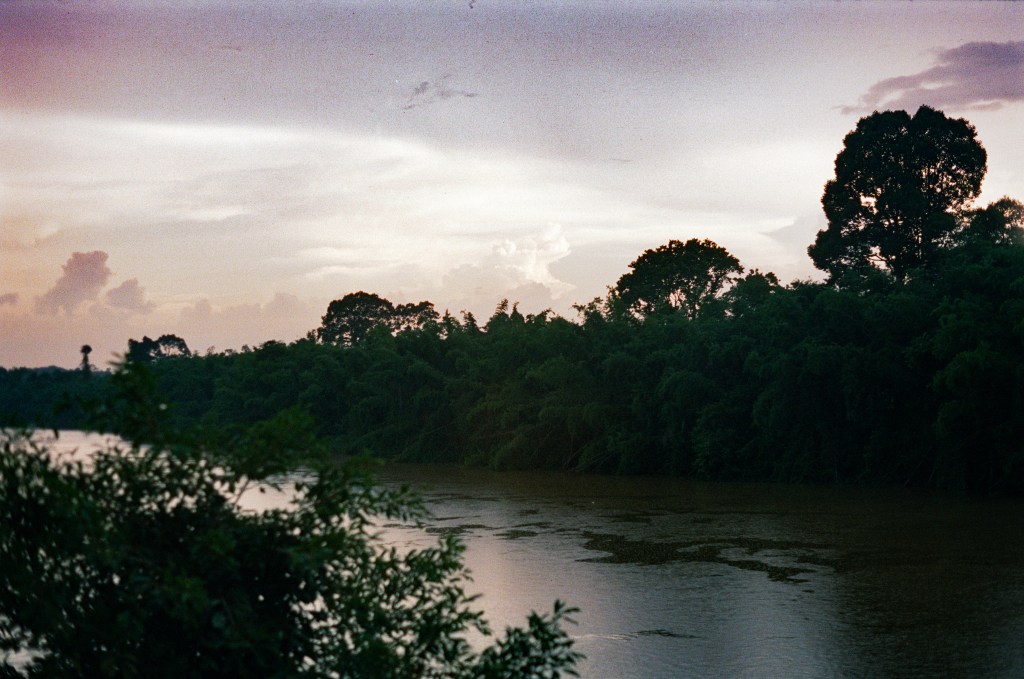
Green Bamboo is a wonderful place. It features a restaurant, a pool, and a few simple bungalows that look out over the river which separates the town of Cát Tiên from the national park. The Vietnamese vision of conservation in this place is remarkable. The main idea has been to fence off a massive portion of forest, open a very small section on one side to the public, and keep the rest as inaccessible as possible. As I write this a bridge is being built across the river offering easier access but on our first several visits, a ferry boat was the only way in or out of the park. We spent that first night eating delicious cuisine in awe of the wide river flowing by and the mysterious jungle on the far banks.
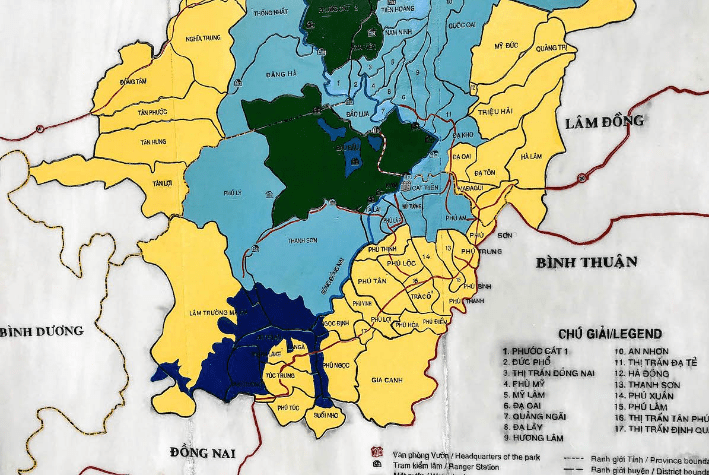
Next morning we were up early and onto the ferry boat looking forward to our first day in the humid density of Southeast Asian jungle. We’d been given a map when buying our entry permit and while having a look I was a little confused. Where we come from national parks are huge and can only be traversed by car. They have multiple lodges and campsites and support a network of routes that can be travelled. Cát Tiên has a main office with some accommodation and one road which departs in both directions. It has one other place to stay and several tracks which lead off the main road to different sights. It can also only be travelled by bicycle or on foot.
We hired some archaic bicycles picked a direction and headed off. Not long thereafter we can upon a stop. We parked our bicycles and followed the trail into the jungle. A path snaked along into the shady silence. Soon we came upon a truly immense tree. Known as the Tung Giant Tree it is truly a marvel. Huge roots spread in all directions from its base, far taller than me near the trunk. As we stood peering up at this behemoth of a tree an eerie feeling came over us, and we began to hear faint noises up above. Unnerved we scanned the canopy extensively, but the noises always seemed to be just out of our line of sight. With a growing sense that we were being hunted we began to beat a hasty retreat at which point a giant Stump-Tailed Macaque emerged as the source of the sounds. He stared down at us with such contempt and cut an intimidating figure silhouetted against the sky. Only slightly mollified we resumed our retreat towards the safety of the trail and our bikes.
On a subsequent trip while standing in the shadow of this giant the trees began to shake all around us as a group of Black-Shanked Douc-Langurs passed overhead. Dodging falling sticks and a little unnerved by the size of the group we marveled at their agility as they sped across the canopy. On another occasion, with our siblings in tow, we saw a Heart-Spotted Woodpecker hammering away as it flitted from tree to tree.
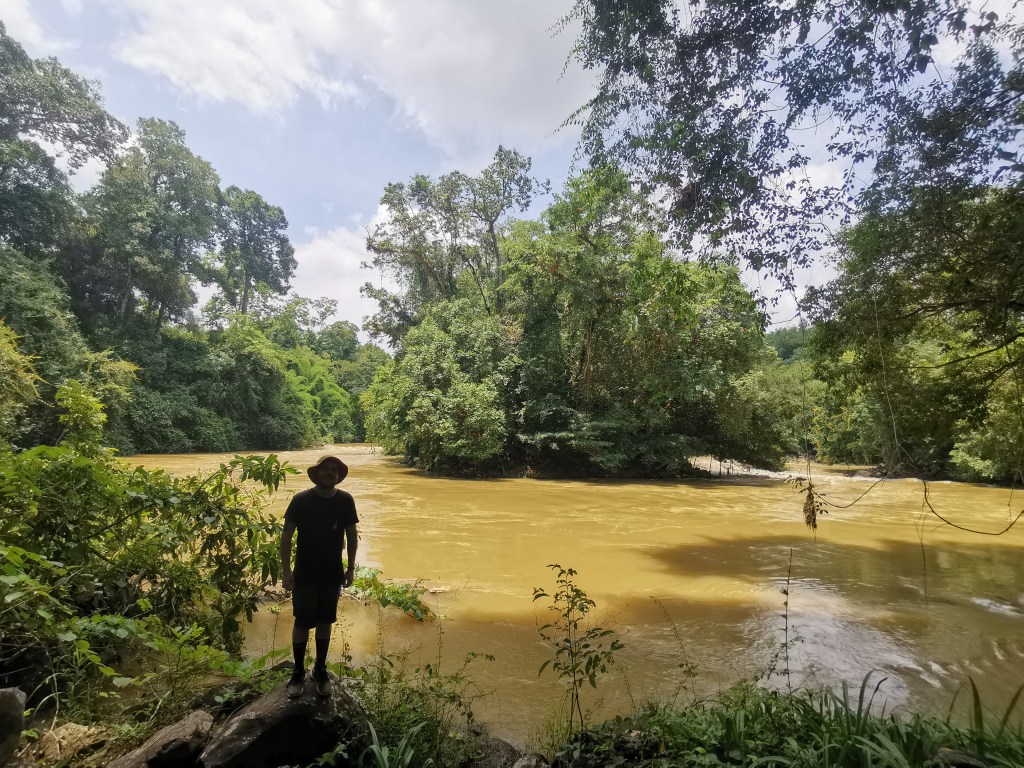
Back on the road there is a shallow river crossing that has given us some trouble over the years. Back on that first meeting the water was running strongly. We blasted through at top speed with our poor bicycles only barely surviving. The spray from the waters had us both drenched and an unwanted side-effect of this was my first ever contact with a horrifying creature: leeches. Every time they’ve got me it has been in this very crossing and I always take a while to notice them as they hide successfully in my sock. On that day I made it to early afternoon before noticing the little blood-suckers and ripping them off in a panic. A steady trickle of blood soaked my socks for the remainder of the day and I have since learned a healthy respect for the little creatures.
A little further along is a more major branch off from the main road, this one leading to the Heaven rapids. That first trip we were there in the beginning of rainy season which we’d heard is ill advised. One side effect of this was that the dirt tracks were seriously muddy and the bicycles were pushed to their absolute limits (along with us) traversing some patches. Another was that the Heaven Rapids were absolutely thunderous. A true spectacle, even in the driest parts of the year, that first impression was incredible. Observing from the banks the water pounds relentlessly past, unforgiving and unyielding. Really something to see.
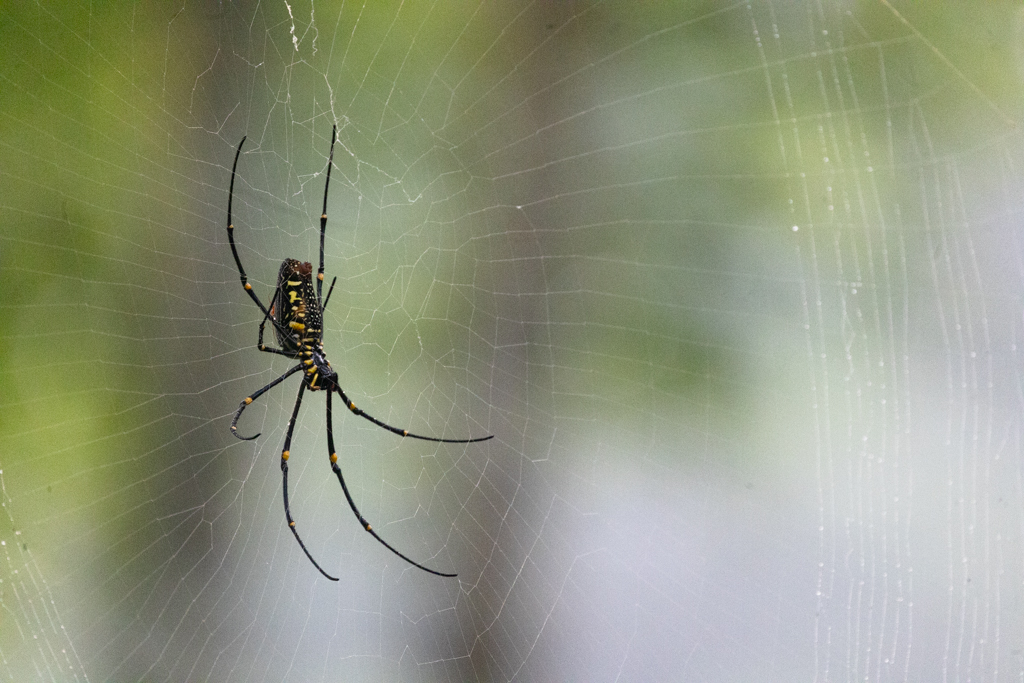
From Heaven Rapids a series of small walking trails run through the dense brush. These are the botanical trails. On that first trip we avoided them as they appeared seriously overgrown. With a healthy phobia of snakes and spiders alike we decided not to brave the places a bicycle could not safely pass. Since then, we have explored these and have found one of the truly quiet sections of the reserve. An exceptionally peaceful place for a stroll in terms of feeling like you are as far away from civilisation as possible. Spiders do abound however so a careful eye on the path is a necessity.
Back on the road, the next sight is another enormous Tung tree. This one carries the name Uncle Đồng in honour of the late Prime Minister of Vietnam who visited the area in 1988. This particular Tung tree is estimated to be around 700 years old. Incredible to think that this tree was around as the Đại Việt people repelled three Mongol hordes and marched towards a golden age of prosperity long before colonisation and the crisis of modernity. A tree that stood when the jungle would have been full of the tigers and rhinos that are only memories now. Elephants are still present in the park although they stay away from the sections accessible to people preferring the deep jungle. I’ve heard stories of them being seen but never been so lucky myself. I always resent the idea that history is captured in buildings and man-made things when trees like this stand in defiance of all that humankind has done to the natural world.
Shortly hereafter the road is no longer paved, and a dirt track leads the last few kilometres to the start of the trek to Bàu Sấu or Crocodile Lake. On busier days there is a kiosk here but on that first trip we were there alone. We were unsure about whether we would have enough time to make the 5 km trek there and back with enough time to get back to the boat before the last crossing. Deciding to roll the dice we headed off as fast as we could. The path to the lake passes through some of the densest sections of jungle, suffocatingly hot and humid most of the year, it is also enchantingly beautiful. Tall trees hold the canopy aloft far from the trail and life abounds. On that first trip we encountered a Blue-Winged Pitta, an exceedingly uncommon bird, as it raced off the path ahead of us and disappeared completely despite bright plumage.
This path also gave us our first glimpse of the famous Yellow-Cheeked Gibbon. A sleek long-armed primate without a tail that swings through the treetops with incomparable grace. The males are completely black apart from the yellow cheeks which give them their name, while the females are pale yellow aside from an entirely black face. They let out haunting birdlike calls that echo for miles around and reverberate through the early morning. On the trail to Bàu Sấu we stopped at the sound of rustling in the trees, looked around and just as we were setting off again a jet-black male swung off from his hiding place. Disappearing in seconds we were awestruck by the grace of his movements and the speed at which he went. We have been so lucky to encounter these magnificent creatures on all our trips to Nam Cát Tiên. From mothers nursing their young to a huge group howling into the morning mist, our sightings have been varied but all deeply special.

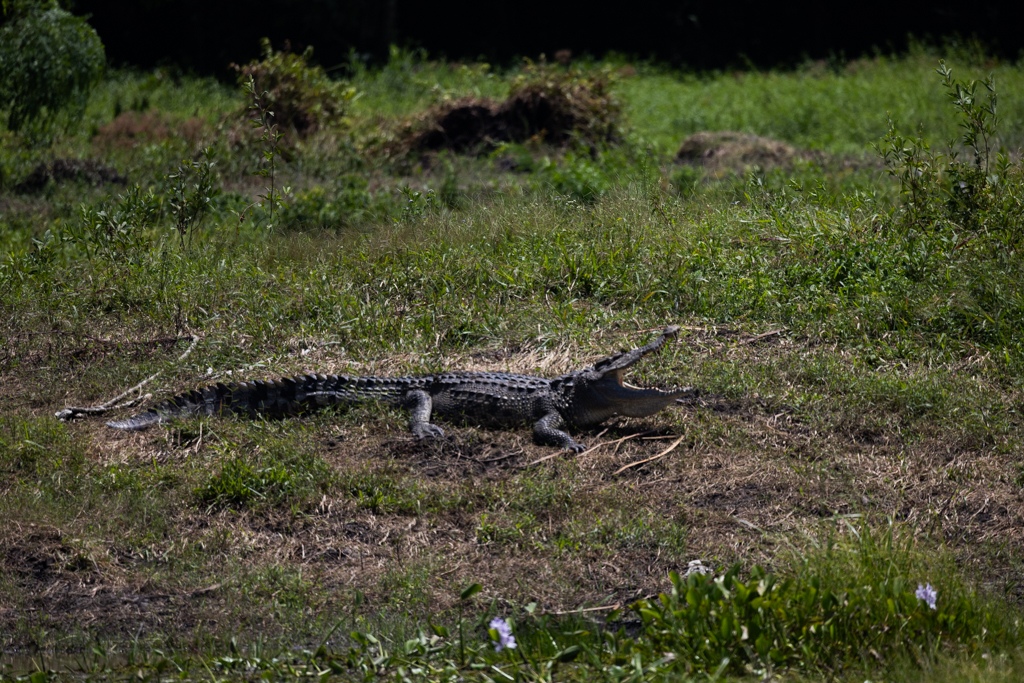
After that first fleeting glimpse we traipsed further into the jungle. Spying some bird life like White-Rumped Shama and Lineated Barbets on the trail, as we made our way finally to the ranger station on the lake. It is a simple building on stilts with a tower that protrudes from the roof and overlooks the expanse of the lake ahead. The rangers are friendly and supply room-temperature beers and noodle soup upon request and allow you to laze around and recover from the jungle heat in the marginally cooler shade of their hut. There is a walkway down to a jetty which juts out into the lake and supports two boats which look particularly unseaworthy. From here if you are lucky, you might see one of the last remaining wild Siamese Crocodiles.
With around 1000 left in the world, and with that number declining year on year these are perhaps the rarest reptiles we have ever encountered. On some visits to Bàu Sấu however you would never guess this to be the case. A true haven for the species, the lake housed around 60 individuals in 1990 but today around 500 make the area their home. This incredible ballooning of the local numbers is a testament to the fact that sometimes, in order to protect a species, we need to hide it as far away from man as possible. We have been seriously lucky to see them on every visit. From brief but close encounters from the end of the jetty to seeing several sunning themselves on the banks, they are there if only you look for them. Certainly, it is worth the 10km hike to see these prehistoric creatures living as they are meant to.
For two years we believed Bàu Sấu to be the furthest accessible extent of the park on that end however on our most recent visit we ventured further. Cycling through deep mud and occasional drizzle we made our way past the deformed Lagerstroemia tree up to a last stop on the map at the incredible Hundred-Trunked Ficus. Bursting with birds like Thick-Billed Green Pigeons, Sooty-Headed Bulbuls, and Common Ioras, the Ficus stands proudly in the clearest wild stream. We swam amongst its roots and marveled at the sheer beauty of this unexplored area of a place we thought we knew well. Every time we visit we discover something new. On that first day we soaked up the wonder of crocodile lake before marching back to our bikes from where we set off for the headquarters. Having thoroughly explored one end of the park the next day we would check out the other, not before one last wild encounter that I’ll never forget.
As we cycled back the way we had come, I was only vaguely aware of direction and speed as I tried to capture the surrounds and ourselves with my phone camera. Cycling with one hand on the handlebars and the other trained on my wife behind me I captured her scream “snake!” Indeed, there was an enormous black snake crossing the road ahead of us. The screech of our brakes saw this creature off the road and into the thick bush beside us. Upon reflection we have deduced that it could only have been a King Cobra. The longest venomous snake in the world it lives in many areas around Asia although numbers are sadly decreasing. Our deductions were confirmed later in the day when we met a lady of the Ma ethnic group, who’s people have lived in and around that area from hundreds of years. She relayed to us that a long black snake would undoubtedly have been a King Cobra and relayed a frightening tale of coming around the bend of a path several years before and coming across a pair of them tangled in combat. Snakes scare the absolute crap out of me, but I have a deep respect for them and understand that I am a guest in their home when I enter a jungle.
That night we sipped beers in a hammock and watched a mighty monsoon boil over into a torrential downpour over the river. A monumental scene that underscored the beauty of this wild world. While many would advise against a rainy season visit, nothing compares to watching a monsoon, from a dry and safe balcony. The next morning, we would head back into the park, this time heading the opposite direction into the more open areas
Another early morning saw us remount our ancient bicycles and set off down the road going the other way. The landscape is totally different here and far more open. The road follows the river initially before pulling away through a section of dense foliage and then opening out on some grasslands which are often more like marshes depending on the season. As we cycled along, we saw a spectacular array of birdlife. This section of the park has often delivered great sightings for us like gaurs (wild water buffaloes), deer, Green Peafowl, and Oriental Pied Hornbills. While the sightings are more plentiful, they are often as fleeting, and the wildlife is as difficult to photograph here as anywhere else in the jungle.
On that first trip we cycled along stopping periodically for the birdlife spotting bee-eaters, woodswallows, woodpeckers, and more. We passed a conservation centre where the park rangers are rehabilitating sun and moon bears which are in dire straits in the region unfortunately. Their decline has been largely due to habitat loss, poaching for use in traditional medicines, and the illegal pet trade. Heartening to know that efforts are being made to intervene, however. We continued along and soaked up an environment totally different from the day before. The jungle canopy provides total shade on the road to Crocodile Lake, the inverse route offers very little shade however and we went from muggy jungle heat to scorching sunlight beating down on us. This route also has far fewer points of interest along the way. Aside from two towers which offer a vantage point over the surrounding wetland and a bridge over a small stream, the road progresses without interruption.
We wound up seeking shade under a monumental tree which offered us some much-needed respite from the sun. In the shade of this tree, we watched Vernal Hanging-Parrots among the branches and a variety of bulbul species at work in the nearby bushes. That road provided us with a far more relaxed day as we cycled leisurely from one shady patch to the next. We decided to pursue the road as far as we could and wound up in some woodlands very different to the forest of the day before. Here we found a Red Junglefowl as well as many small species of birds whose rapid darting through the brush prevented us from making an identification. Eventually it was time to head back.
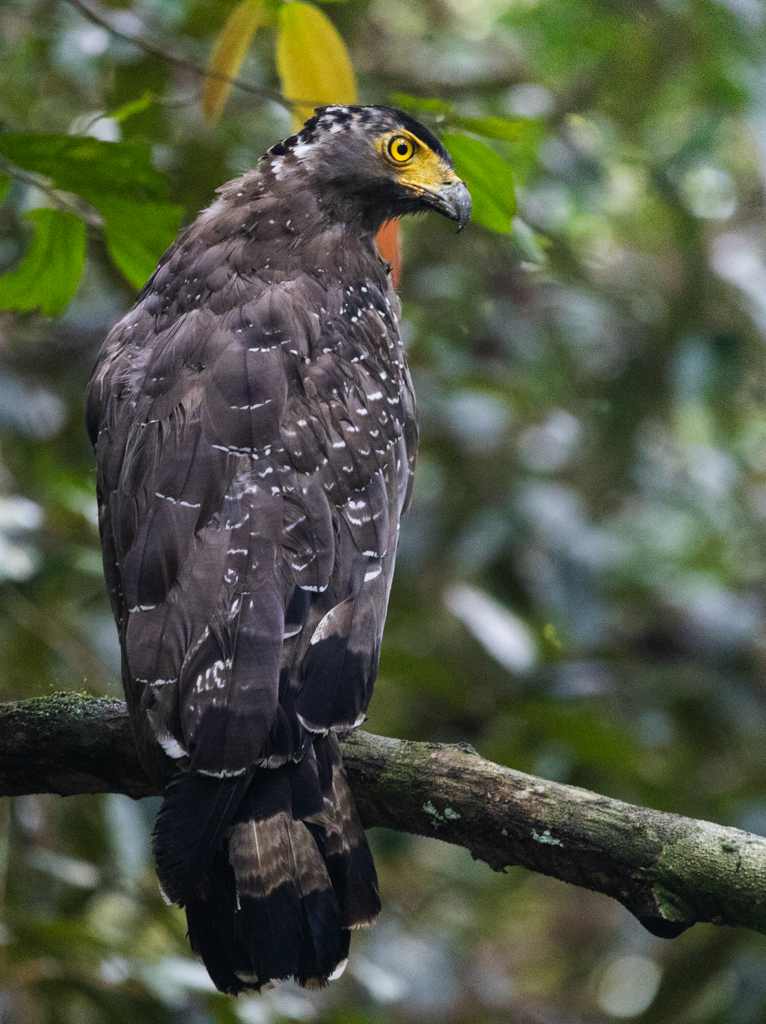
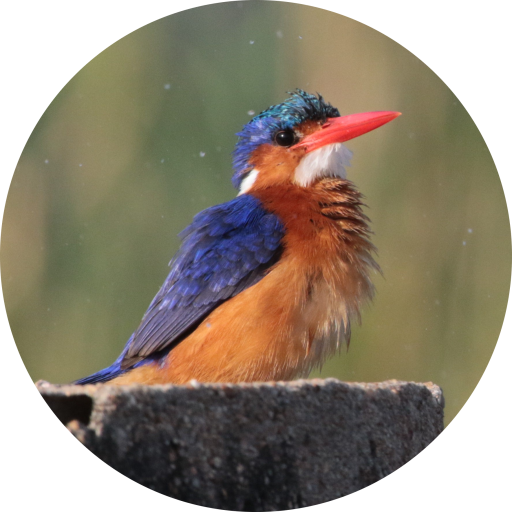
We spent a few more days exploring and began to scratch the surface of the wonders held within. On our final morning, we hopped in a boat with a local and he tore up and down the river at sunrise pointing out birds to us all along the way. This was one of the most magical experiences I have ever had. We’ve seen five different kingfisher species on the river as well as Green-Billed Malkoha, Black-and-Red Broadbill, and Greater Coucal. That first trip on the river was something special though. We were completely alone with our guide out on those waters. We watched as the jungle awoke with the call of the gibbons and the rising cacophony of birdsong as it warmed under the rising sun. Our guide was even gracious enough to let me drive the boat back to the jetty afterwards.
While we have returned many times that first trip stands out as our first real experience of the jungles of Southeast Asia. More than that we were able to see the place in such a special way. We had it almost completely to ourselves as the weather kept others from venturing out, and this was long before the major development of the bridge. Amazing as it is to know that this place is becoming more popular every year and that a bridge is going to allow for many more people to visit, it was great to find it just the way that we did.
Words and Photos by Grant O’Beirne
 There and Back Again
Leave a comment