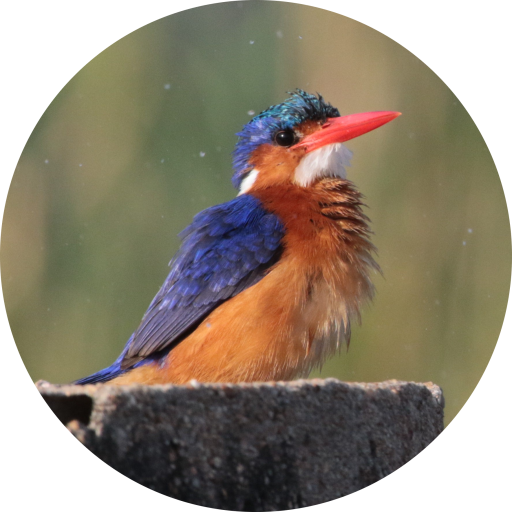
On the 22nd of February 2025 I got married to the love of my life. It was the best day and on a small farm outside of Wellington we celebrated with our friends and family. The next day we set off on the most amazing trip to date. Our honeymoon consisted of a month-long road trip in a Suzuki Swift that took us from the Western Cape of South Africa across the breadth of the country and up to the border with Mozambique. The experience was unrivalled and made doubly special by the fact that we hadn’t set foot on South African soil for 2 years almost to the day. It was a honeymoon and homecoming rolled up into one, reaffirming our love for the country and its natural and wild spaces.
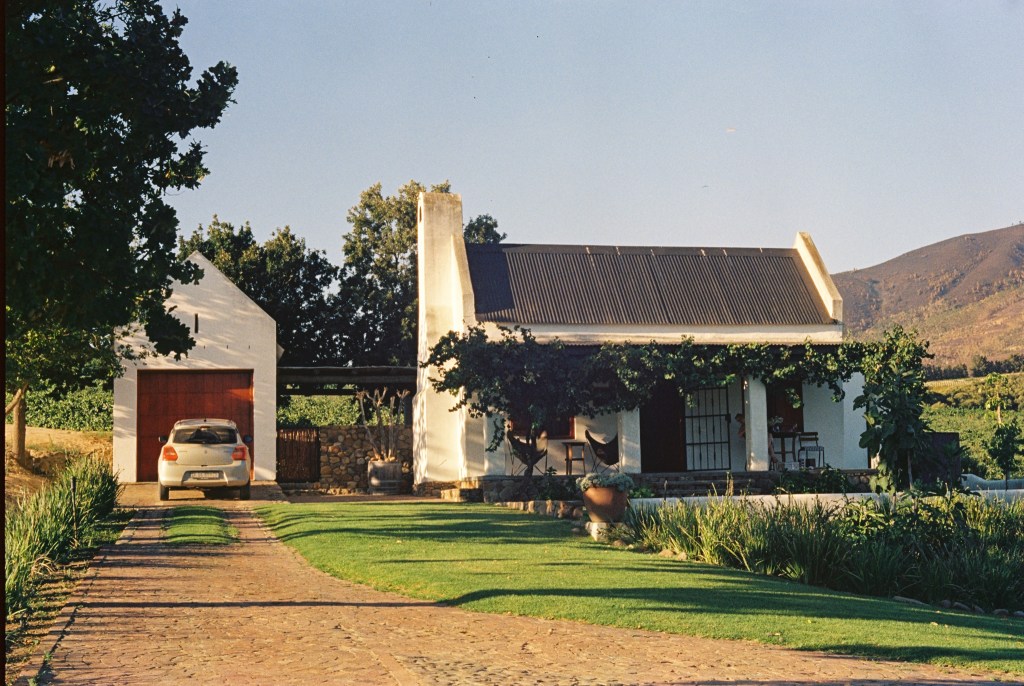
The Western Cape is uniquely beautiful with its mountainous fynbos vistas found nowhere else on earth. It is a natural paradise and beginning in Wellington we immersed ourselves in the splendour of the winelands. Waking the morning after our wedding with mild hangovers and memories to last a lifetime we set off from the majestic hills of BoPlaas an hour down the road to Bosman Wine farm. Up on the rolling hills behind the vineyards there is a cottage where we spent our first night as husband and wife. Boasting panoramic views of the surrounding hills and distant mountains with rows and rows of growing grapes between, the place was perfect. Enjoying several glasses of wine as the sun gently passed below the horizon bathing the valley in a golden light, was the most magical sight. Relaxing for the first time in some weeks, it was great to simply sit and take in the sheer beauty of the area.
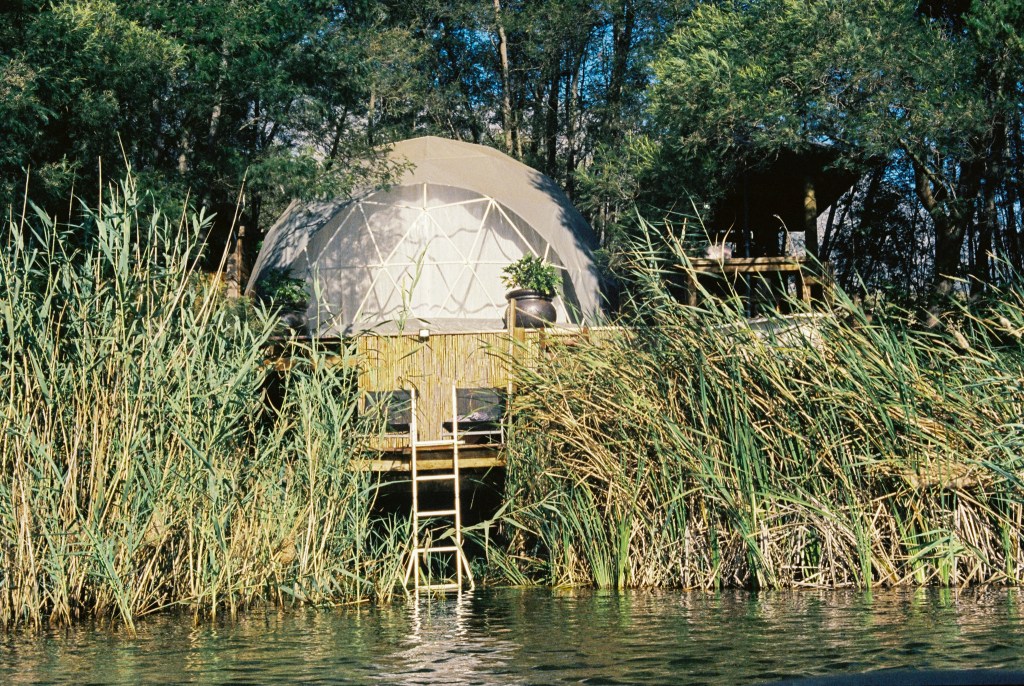
The next morning, we had a leisurely one with a quick wine tasting before heading on to our next destination outside of Tulbagh. Drawing near to the small town we were immediately struck by the beauty of the area, contrasted unfortunately with a fire raging in the hills. In the shadow of the far-off flames, we stopped in town for a quick resupply of food and drink before making our way to the dome. We would spend the next few days here perched on a wooden platform which served as a jetty over a small dam. The place was magical with an outdoor kitchen and a tube for splashing about in the cool waters at our doorstep. We were completely isolated apart from the warblers and weavers in the reeds around us singing the lullaby of natural silence. The sunset over the dam was sublime and at night the stars shone brightly as the orange hue of the fire remained an ever-present line on the horizon.
The next day we hiked up the mountain towards the line of the fire, although not intentionally. We’d seen that there was a trail up to a waterfall although being the dry months and with no sign of water anywhere we were not entirely convinced that it existed. We crested the ridge above the dome and marched the line up into the hills. Coming to a small stream we deduced that we were on the right track and continued upwards. The fynbos was dry and broken up here and there by slippery mountain scree. The journey followed a gradual slope although some sections were a little treacherous. Eventually the path took a rather steep upturn and a little climbing and scampering was required. We followed the stream as it cut into the mountainside and as we went the sound of falling water intensified.
With every step our belief that we would find a waterfall rose and fell. The sound was our only evidence, and we beat a path through thickening brush and traversed ever-steeper rocks. Eventually we arrived at the place where a waterfall must be at some point in the year, to us it was simply a trickle. Although the ‘waterfall’ itself did not really inspire too much awe, the area was staggeringly beautiful and certainly worth the arduous trek in the dry summer heat. We had also found ourselves disconcertingly close to the fire line and while almost certainly far enough to not be in danger we decided to beat a retreat. With the slight smell of smoke in our noses we headed back down the mountain and jumped straight into the dam to cool off. The rest of our time there was spent messing about on the water, reading, drinking, and soaking in the classic cape landscape.
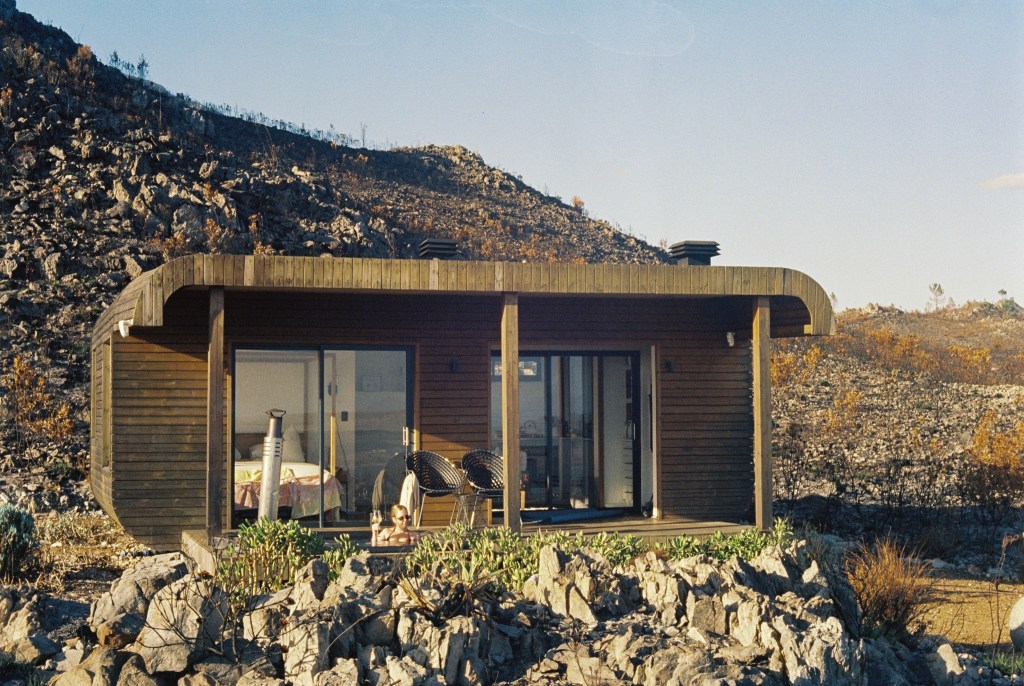
Our next stop was about thirty minutes beyond the town of Villiersdorp. Overlooking the mighty Tierwaterskloof Dam, the biggest in the Western Cape, there are some mountain pods. The drive over was rather uneventful although the landscape was consistently marked with signs of fresh fires. We did stop for a quick wine tasting as our time in the winelands was coming to an end, although once again I had very little as the designated driver. Arriving at the sight of our pod home was at once jarring and spectacular. The area had been ravaged by fire soon before our arrival, rendering the entire site almost like a lunar landscape. An otherworldly environment passed by as the Swift struggled up the rocky scree and pulled into the driveway. On one hand, the surroundings were a little sad as we could only imagine what beauty had lain there before, however the landscape that greeted us held an immense charm, nonetheless. The view over the dam was beautiful as well and we could see for miles in all directions from our deck. We whiled away the hours on that deck taking in the scenery and sipping coffee in the morning and wine in the afternoon. After two blissful evenings here, it was time to head up to the Garden Route.
Waking early for a five-hour drive, we set off bound for Wilderness. Leaving wine country, we wound our way to the N2 and joined it heading East. Known as the Garden Route, the road traverses the Western Cape Coast and is extraordinarily beautiful. With lush forests on the left and ocean vistas on the right we followed our route into the small town of Wilderness. Neither of us had been before and we were completely blown away by the place. Tucked up against forested hills that face the sea, Wilderness is just that, a natural haven with breathtaking natural beauty whichever way you turn. We stayed in a cozy cabin perched on the top of a hill which faced the forests away from the sea. Feeling a million miles from anywhere we hit the ground running. As we arrived at our accommodation, we jumped into some walking clothes and set off down the slope into the valley we overlooked. Disappearing into the thick montane forests we walked steadily downwards as Knysna Turacos, Greater Double-Collared Sunbirds, and Bar-Throated Apalis’ ranged all about filling the trees with birdsong.
Reaching the bottom of the valley we followed a stream out of the forest and met the waters of a tributary of the Kaaimans River. The fresh water was crisp and after a quick dip we picnicked on the rocky banks as the light was beginning to fade. Some cheese and crackers and a cold beer or two went down with the sun. As shadow began to run through the valley we packed up and made our way back. Hiking down into a valley is much more pleasant than hiking back out and with scarce daylight the pressure was on. We made good time and got back to the deck in time to watch the last light fade on the woody horizon. We went into town for dinner and ate some of the most incredible seafood before returning to a patch of paradise on the hill.
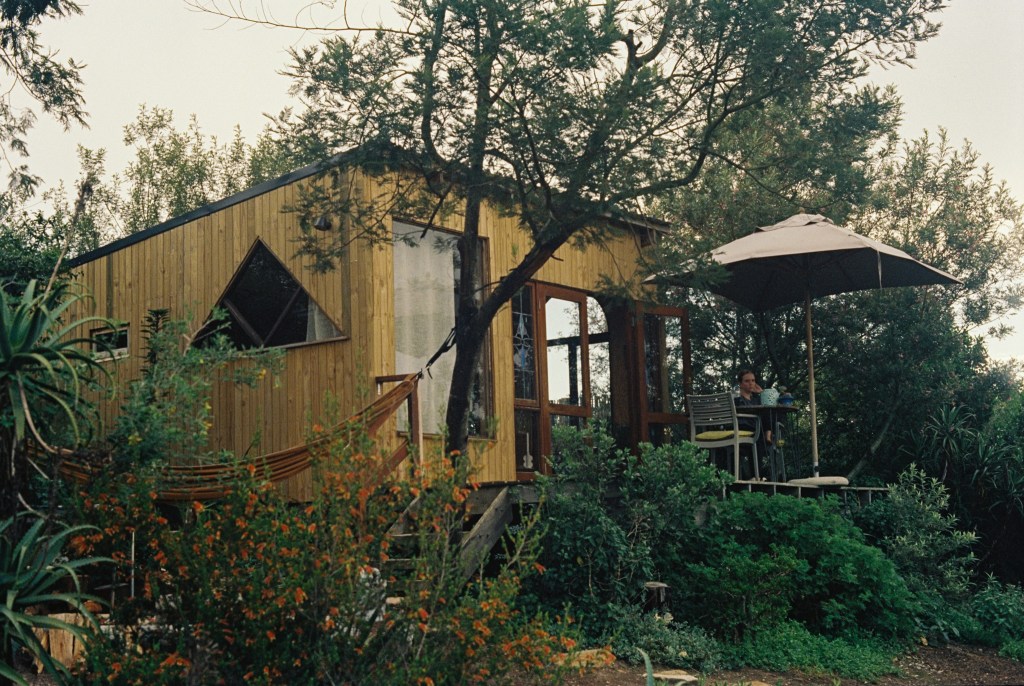
The next morning was magical; we got a leisurely start and watched as the thicket around our spot came to life. Aloes were alive with flitting sunbirds, both Greater Double-Collared and Collared, while Canaries, White-Eyes, and the odd Neddicky went about their morning rituals. Sometimes in life all you need is to sit and look at the wonders of the natural world with a coffee in hand. Once we had taken in as much as we could it was time for a hike. He headed through town and out the other side to the start of the Kingfisher trail. The trail passes through more forest along the banks of a river and turns to gradually make its way up into the hills. The hike was fantastic and at one point we crossed the river on a pontoon which was a first for us and sure beats wading. We saw many birds along the trail and a new one for the list too in the form of the Yellow-Throated Woodland Warbler. After a good deal of trekking, we crested the hill and found ourselves in the shadow of some enormous rocks through which a waterfall cascaded. The pool at the rocky base was a lovely spot to spend the rest of the day swimming and picnicking the afternoon away.
Heading back, we made good time and made it back to our hilltop residence for an epic sunset over the trees. We lit a fire and cooked up with the most amazing backdrop. As night fell the dwindling golden light was replaced with a mass of stars that lit up the night sky. Living deep in a big city we forget what a night full of stars is like and were absolutely mesmerized. A night like that really reinforces the knowledge that we are but minuscule specs in this greater universe full of awe and wonder. We spent much of that night looking at the stars and forgetting earthly troubles, not that any could find us there.
The next morning, we had a short drive to Tsitsikamma, where we stayed in another epic dome out in the forest. Before we did though we stopped in Knysna and took in the spectacular view out over the sea and towards the Knysna Heads from the peak of a hill which coincidentally housed a spa that we had been gifted a voucher for. An incredibly relaxing morning was had as we enjoyed our treatments that started with a full body massage and ended with a waterbed jet treatment that was out of this world. We then stopped for an unbelievable prawn curry in Plettenberg Bay with family. They were staying in a magical spot up on the top of the hillside looking out over the sea although cloud cover obscured much of what must have been a spectacular view.
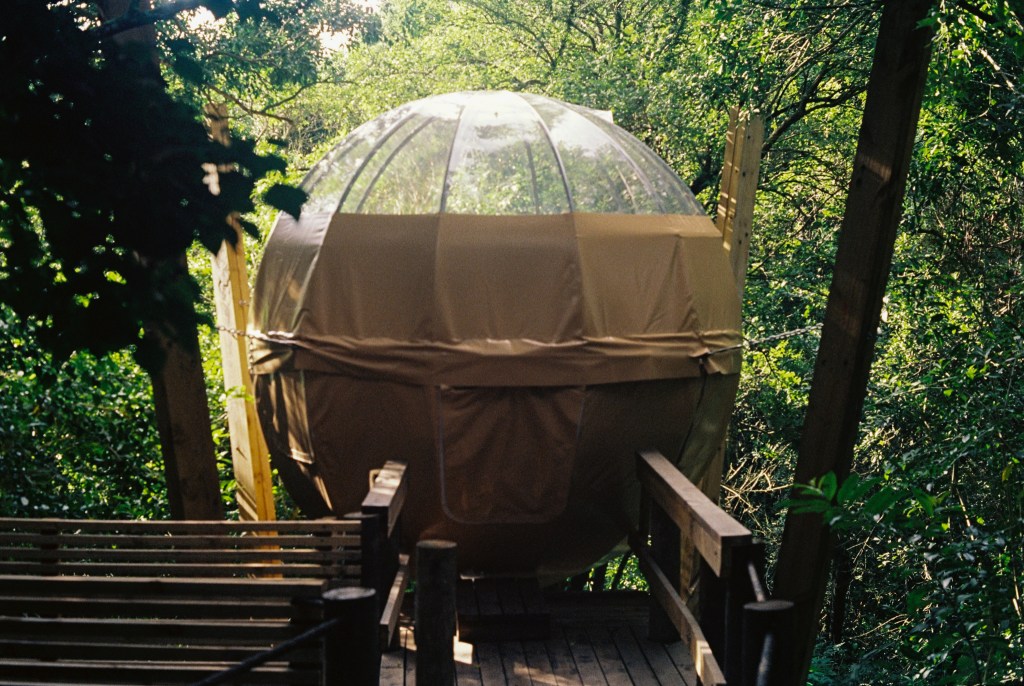
Finally, we arrived at our accommodation in the late afternoon. Immediately we were surprised to find crocodiles in an enclosure next to reception. The rest of the area was magical, on one side rolling hills that sloped gently down to the beach and on the other dense indigenous evergreen forest, some of the oldest woods in the country and home to the mighty Outeniqua yellowwood tree. Our dome was nestled at the end of a walkway beneath these giants, and a cozier scene could not be described. We passed the night with a braai under the gently swaying canopy as the stars peeped through.
The next morning, we woke up early and drove into the Tsitsikamma national park. While we were only a few kilometres as the crow flies it took us longer than expected as we had to take a long roundabout way to reach the gate. Arriving a little late we nonetheless were in time to join a group that would be kayaking up the Storms River Mouth. This was an experience second to none. After kayaking a little way out to sea to soak up some morning sun and get a dramatic view of the valley we would shortly be passing through we began to paddle upriver. The views as we travelled up the river mouth and into the valley beyond were staggering. The cliffs high above us were alive with activity and we could see small birds on their varied morning missions as well as some larger specimens like a magnificent fish eagle and excitingly for us, a forest buzzard which was another new bird for the list.
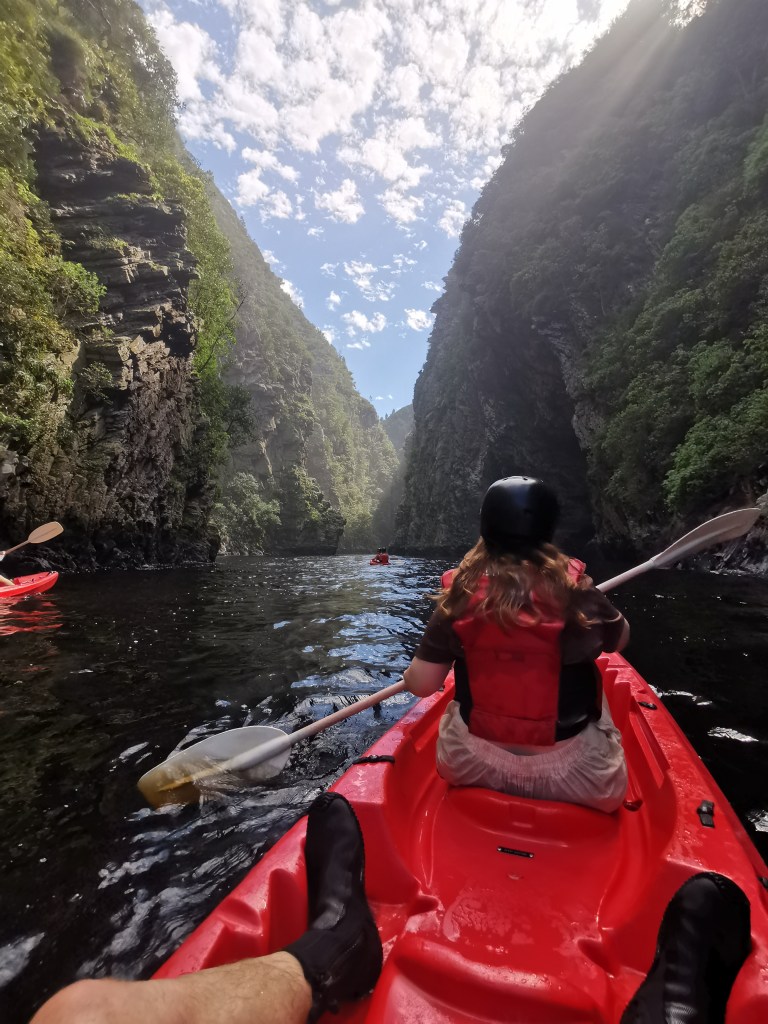
At one point we encountered another new animal for us, the Cape Clawless Otter. Bobbing here and there off to one side he swam gracefully around. Watching him for some minutes we saw his wonderful ability in the water, gliding effortlessly alone with a casual eye cast in our direction intermittently. Eventually we moved on but the creature was clearly unsatisfied with the interaction and so trailed us for some minutes as we wound our way further upstream. With the otter still in pursuit we also spied a half-collared kingfisher which we have not seen very often.
Paddling behind our guides we heard some amazing tales of sharks in the river mouth and even upriver as far as we had got to. They told us about the trees and the animals they regularly see and enhanced the journey with details about the majestic nature which now engulfed us. Eventually we made it to a rocky bank which essentially cut off the river mouth from a big pool with the river feeding it on the opposite end. Here it was safe to swim and so we paddled around face down on some bodyboards, had a standing competition, and did some flips off a low cliff. A seriously fun morning. After much frolicking we turned to head back and wound our way down the river to the mouth before hiking back to the office where we found the Suzuki and headed back to our forest dome.
Another afternoon passed into evening this time with a picnic out amongst the trees which paired nicely with West-Coast Wine. The second night passed by a little rougher than the first as a storm blew over later into the evening. The wind picked up suddenly and thick clouds rolled over the trees obscuring the nights stars. We retreated to the dome which had a clear top and watched as the rain belted down on us as the trees shook violently. It was easily one of the most pleasant ways to experience a storm. The next morning was a stressful one for me. I cannot really explain why but I have this compulsion to do things that scare me deeply. I am uncomfortable around heights and so I decided that I should do the world’s highest bridge bungee. This was an experience I will never forget as much as I might want to.
The experience begins with the good folks of Face Adrenaline taking your measurements and fitting you with a harness that could never feel secure enough. You then sign an indemnity form that absolves them of responsibility for what feels like your imminent death. Next you are allowed to kick rocks for a couple minutes and look out over what would otherwise be a beautiful view. This is a great time to take a good long look at yourself and ponder about this decision you have made. Before you know it, the time has come. You are escorted down to the base of the bridge and encouragingly there is a sign to warn of dangerous snakes as if you needed another potentially deadly encounter on your plate just then. Finally, the ‘fun’ begins. You are strapped to a zipline and flung out over the valley below, ripping towards the arch under the bridge.
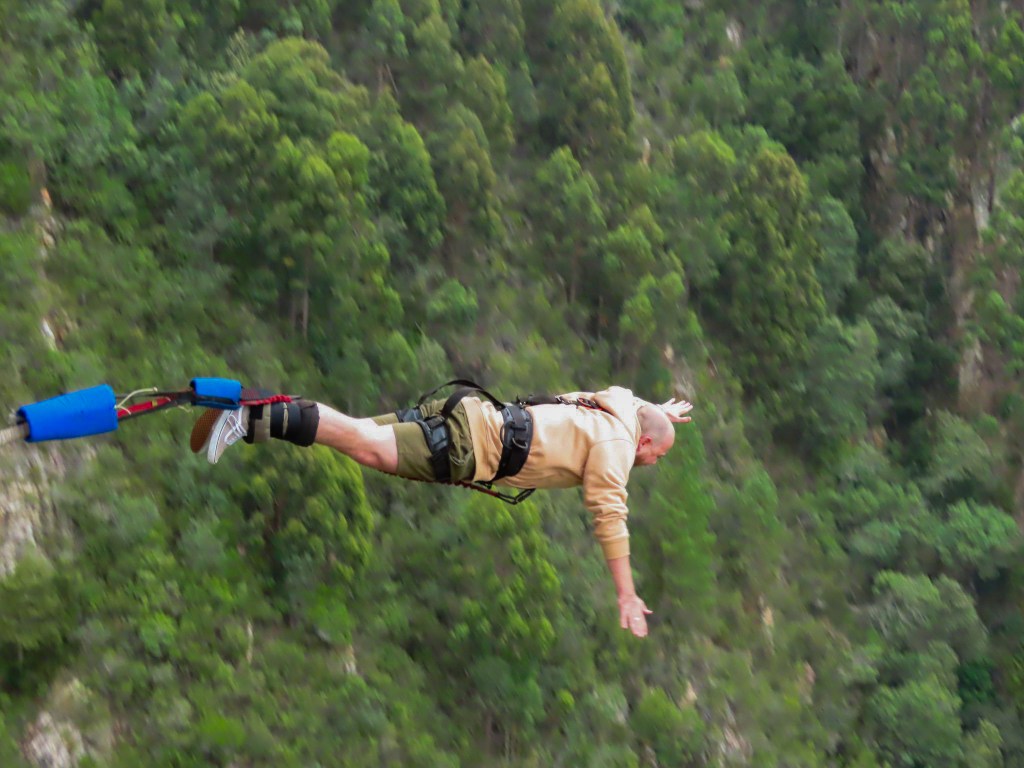
Arriving here I was fortunate to be the only individual jumping in my allocated time slot. Fortunate because when there are others involved time drags on and waiting around inevitably follows. Waiting would have been the death of me. I wanted to jump off that bridge as quickly as possible, get this whole thing over with and return to solid earth. As a fun quirk that came as a package deal with my fear of heights, I do not trust any man-made structure over a certain height not to crumble upon my arrival at the highest point. The Arc de Triomphe in Paris, for example, is a structure that has stood for two hundred years but I would not dawdle up top lest the thing topple.
Back on the bridge my prayer for swiftness was mercifully answered and no sooner had I unclipped from the zipline than there was a shackle in bindings around my legs and I was separated from the edge only by a small gate. The Bungee cord was then attached, and I was supported on either arm out to the precipice. The two fellas at each arm were upbeat and filled me with a modicum of confidence that I would not soon perish. At my left I heard a whisper, “you are the safest man on earth right now Grant.” Before I had time to question that logic a shout rang out, “3, 2, 1, bungee!”
Without time to think I launched myself forward with as much force as I could. I may have been scared witless, but I was not going to pause at that moment. As soon as I was off the edge the fear melted away and I felt sheer exhilaration. Apparently, my body was still very scared, however, as I let out a completely autonomous scream which I heard for the first time when watching back the video. I forced my eyes to stay open and watched with amazing clarity as the valley floor raced towards my face with murderous intent. Suddenly and with less force than I thought the process reversed and I was falling backwards towards the bridge. I learnt afterwards that you make it around 75% of the way back to the bridge before the most awful weightlessness overtook me and I was bungee jumping all over again. The process repeated four or five times before I came to a rest, staring straight down and sickeningly, spinning rather rapidly as the trees and water below me blended into a dizzy hallucination.
Soon, someone repelled down to me and clipped me to his platform. At this point the fear returned in earnest, and I desperately clung to a rope that was not attached to anything helpful, in the hopes that it might save me from falling. As we reached the lip of the bridge the worst was still to come as the full height of the jump now stretched out below me and I had to be swung quickly and lowered to the level of the bridge all in one movement. I held my breath and then it was over. I was unclipped and although somewhat unsteady, I was back on my feet. After being informed that I “scream like a little girl” whatever that means, it was almost over. Not completely out of the woods just yet I had to walk the skywalk back to solid ground which I would have found horrific any other day, but after what I had just been through it did not seem so bad. Back at the coffee shop I reunited with my wife and family who then joyfully showed me some rather unflattering video of myself screaming and flailing about in mid-air. They could laugh all they wanted I had done it, and shortly thereafter we headed for our next destination, Addo Elephant Park.
The drive was spectacular and traversed the last leg of the Garden route towards Gqerberha (formerly Port Elizabeth). Absorbing the last of the coast for the remainder of the trip we arrived in the city and did some quick supply shopping before heading straight out again. It was so nice to not spend any real time in a city for such a long spell and when we did have to enter the concrete jungle, being sure of a quick stop. The drive from Gqerberha to Addo is not very long and we arrived in the mid-afternoon. Checking in at Colchester Gate we grabbed a map and set off to explore an area that was totally new to us. Cruising up the road towards Spekboom Camp we encountered an altogether different kind of ecosystem. The track from the gate is completely enclosed with dense bush making it very difficult to see anything. This section is dominated by spekboom in Albany Thicket and had us a little anxious that we would not see a single creature during our stay. We needn’t have worried however as the landscape soon opened up into rolling plains interspersed with woodland and fynbos areas. It is a vibrant place with a rich variety of plant and animal life and we began early with some great bird sightings and some iconic elephants.
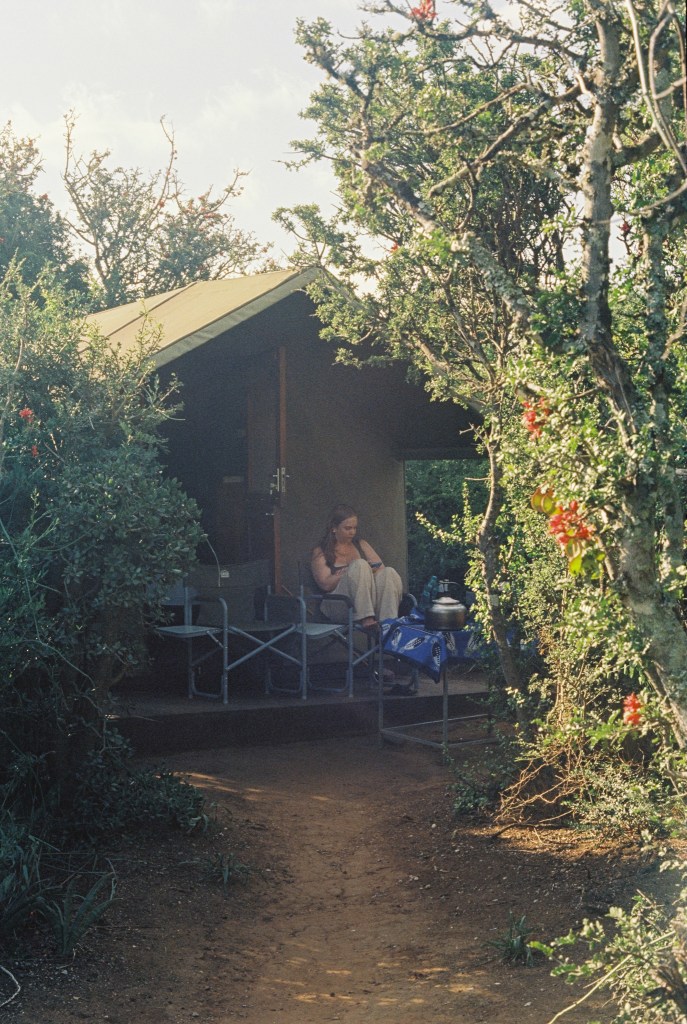
Arriving at Spekboom Camp we quickly realized that apart from one other couple we were the only occupants. We essentially had the camp to ourselves which was just spectacular. The camp hosts a hide area where we spent the sunset perched on benches with a cold Windhoek Draught in hand watching the most incredible scenes unfolding before us as elephants and buffaloes aplenty came to enjoy the small waterhole. The larger game was interspersed with warthogs, zebra, and even the odd tortoise. A great spot to end a day. Much like every other night of the trip we had a braai and soaked up the sounds of the bush which closed in all around us.
The next morning, we woke up with the sun and as the soft glow of dawn crept across the bush we headed out for a morning drive. I take issue with people saying that they see nothing on a game drive as this is impossible. You might only have seen trees and bush but that is still something. You will never see absolutely nothing. That drive however came pretty close, and not so much as an impala crossed our path. We did see several birds, however, but just the usual suspects. We then returned to camp to collect our things because we were moving to the main camp up by the North Gate of the park. There had obviously been some kind of clerical error as we had been unable to book Spekboom for that night due to its being full however the other couple had already departed and there was not a soul in sight as we left. The main camp was nice however and the accommodation boasted electricity which we had been without the previous night.
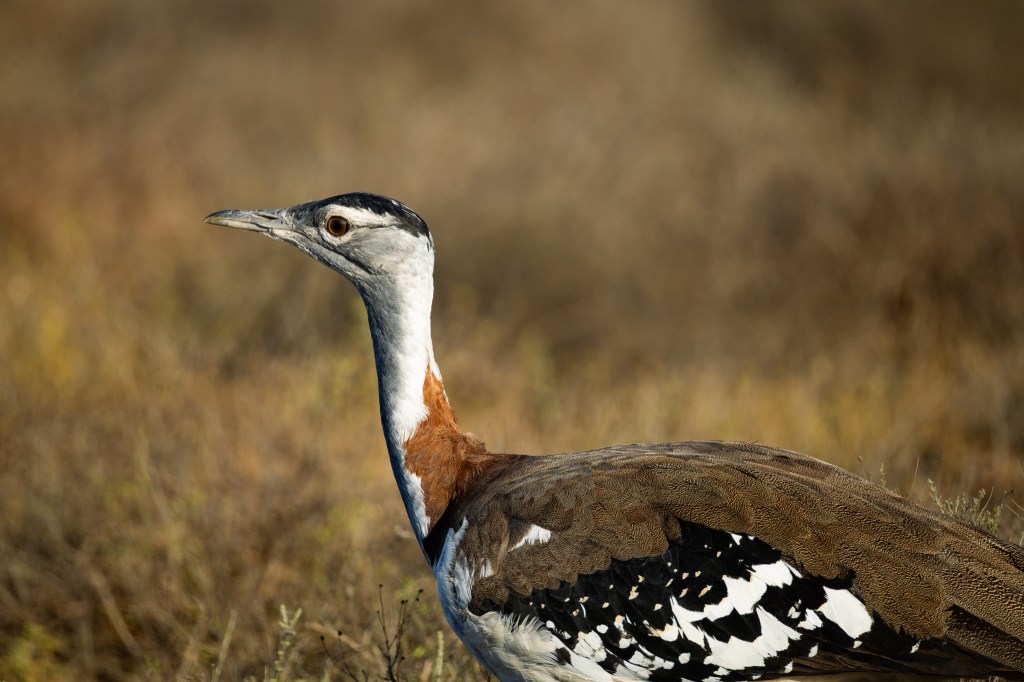
We dropped our things and set off on an evening drive which proved very exciting due to two sightings of Denham’s Bustard, a new one for us and a spectacular bird. We returned to camp rather hastily as we had signed up for a night drive which was very cool and yielded some amazing sightings. Before we’d gone very far, we came upon a Black Rhino trotting across the plains. A seriously special animal to see these days and one that is facing some tragic circumstances. A remarkable sighting that I will never forget. We also saw porcupines which I have only seen a handful of times before and a genet as well. The last sighting was an unconfirmed and bigfoot-like encounter with what might have been a civet. The drive was a great experience and a totally different way to engage with the bush. I always love being out at night looking for a totally different array of animals.
The next morning, we headed back to Spekboom Camp as our two remaining nights had been successfully booked at what was now a completely empty camp apart from us. Those days were spent driving around often to explore as much as we could of the park. An incredible piece of luck or misfortune, depending on who you ask, befell us that first afternoon. We had been without power for much of the preceding days and so our time at main camp had given us the opportunity to charge our phones for the first time in a fair while. Caity is completely against using phones at all when in the bush and is always so present as we drive around. On this occasion, however, she decided to break the rule and catch up with some messages from family for the first time in days. As she was so engaged we turned a corner and there in the middle of the road stood a caracal. Completely astonished to see the beautiful red cat I paused before calling out what I’d seen. At that precise moment the cat deftly jumped high and far into the bush and was gone. I turned to Caity who had not looked up from her phone in time to catch it.
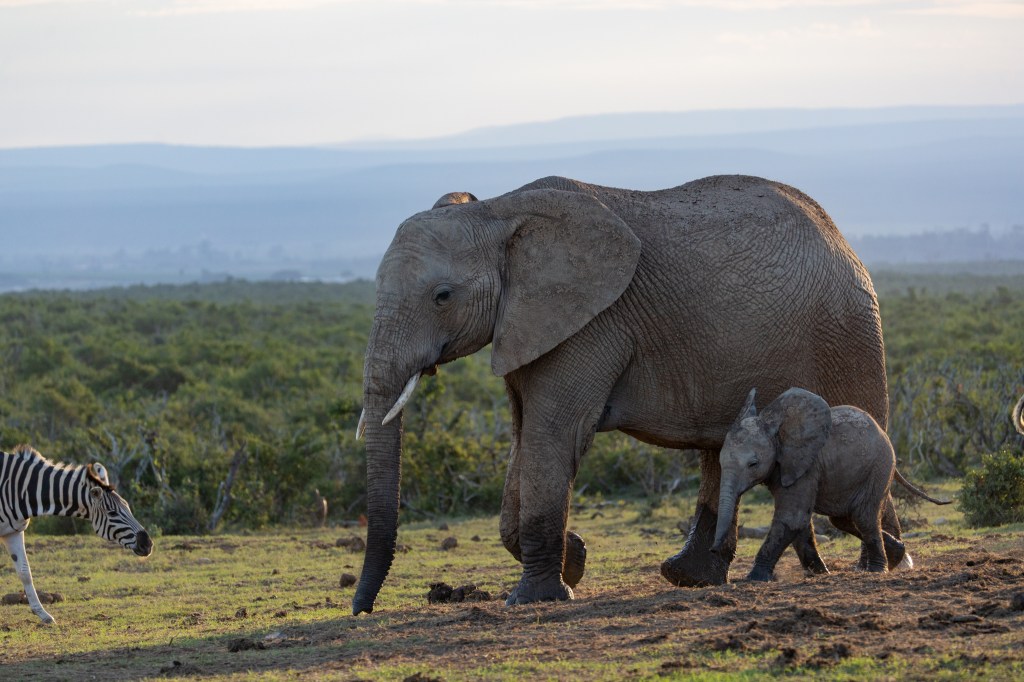
Luckily, we did also share some great sightings including a brown hyena which Caity had never seen before and I’d only seen twice. We also saw another black rhino too and were hot on the trail of a group of lions which we never actually saw although everyone around us seemed to have. Regardless, Addo was an amazing place to stay that really shattered my expectations. We were lucky with special sightings that are quite different and just had the most wonderful time in our own private camp. After a final night in the hide watching a plethora of animals drink at the water hole we departed. A long drive lay ahead; we were heading to the Drakensberg.
The drive to Underberg was to be the longest of the entire trip and took us a good 13 hours. It was not all plain sailing either and we got turned around a number of times and went deep down a dirt track that got too dicey for the poor swift and so we had to take a lengthy detour. Apart from that the journey was spectacularly beautiful. Leaving the Eastern Cape traversing game reserves and passing though mountainous passes populated with baboons was unreal. We passed the border of KZN and then headed up towards Lesotho passing through rolling hills and farmlands which soon turned mountainous. We reached Underberg after the sun had set and had a dicey 45 minutes down a dirt road to reach our accommodation. Miraculously we were treated to another caracal sighting, this time both of us saw it too. An owl watched us creep up the final approach to a farmhouse where our host emerged with her eager and barefoot son to show us the A-frame cabin where we would spend the next few days. We settled in quickly with a couple of beers and some dinner. The stars over the mountains were breathtaking.
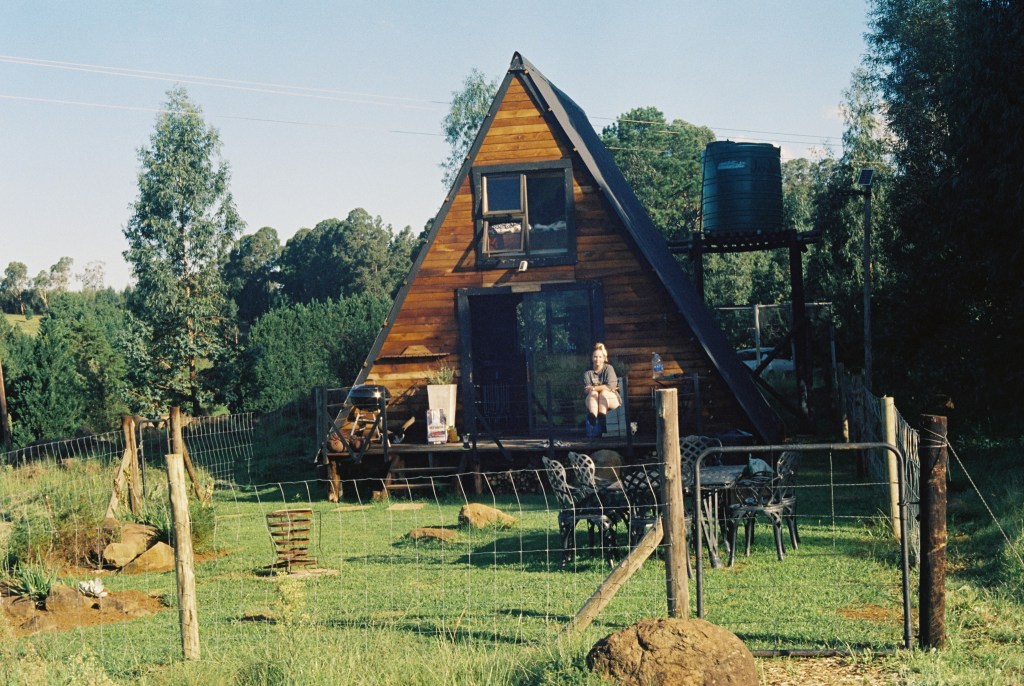
We awoke early the next morning and headed into Underberg to meet up with a man called Frank who was going to drive us up Sani Pass and into Lesotho. As much as I wanted to try it, I do not believe that the swift would have made the drive. Accompanied by a Maritzburg Surgeon and his Thai girlfriend we headed up the mountain. The vistas on the way up are unmatched and the views get more incredible with every passing minute. We passed through the border and then continued upwards with the road deteriorating quickly. Frank was an absolute pro though and handled the road as if he’d done it a thousand times (he has). Halfway up we encountered a little bird I had really hoped to see, the Drakensberg Rockjumper. The little guy was completely unafraid and approached us brazenly allowing me to get some great photos. Seconds later another amazing bird soared high overhead, the Bearded Vulture. Perhaps my favourite bird and just the most incredible creature to see blazing a trail high above those mountains.
We arrived at the top and had our passports stamped with the sweet sounds of a famo duo in the background. Famo is traditional Basotho music which is made with a drum and concertina (or an accordion if finances allow). Other instruments might join the fray but these two form the foundation. It is a fantastic blend of musical tastes and genres and just fits so beautifully with the surroundings. We drove down the road for a while and were taken to a Basotho village where an elder taught us about their customs and culture. He also presented us with some pot bread he had made which was exceptionally tasty. In fact, I ate the majority of it as the others were too polite to go back for more. We then went to the highest pub in Africa for lunch and a couple Malutis (beer from Lesotho brewed with fresh mountain water). The view was absolutely unreal, and we sat and soaked it up for some time before heading down. We then headed back to the cabin for yet another braai beneath the crisp mountain sky filled with stars and a bonfire too for good measure.
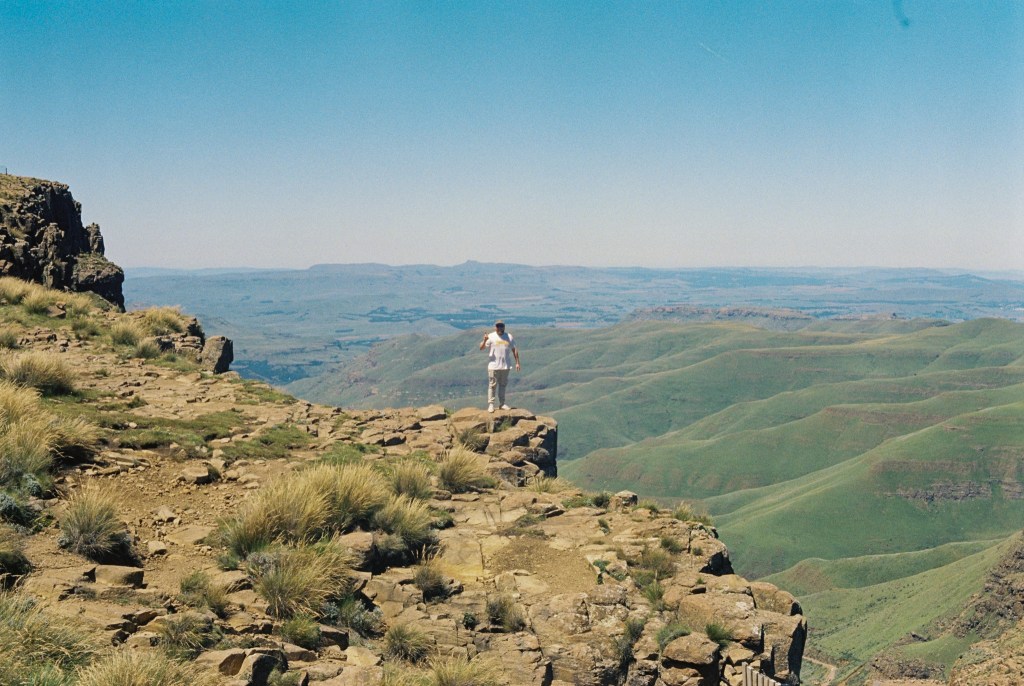
Our plan for the next day was a little ambitious. We geared up for a hike and set off for an hour and fifteen minutes worth of driving which would take us to Lotheni Reserve which is in the Maloti section of the Drakensberg mountain range. We set out eager as can be and passed through Underberg. Once beyond the small town the roads turned nasty. Not only were there steep ups and downs to contend with but the gravel was loose and rocky and recent rainfall ensured a few slippery, muddy patches. While the Suzuki Swift is surely no Land Cruiser it might as well have been that day as she soared over increasingly treacherous terrain with ease. Eventually we arrived and immediately were struck by two things, the first being that there was not another soul in sight, and second that although the area was monumentally beautiful the weather was turning inclement steadily.
We found two employees and signed in before asking for directions to Jacob’s ladder (the trail we would follow). Signing the logbook confirmed that Lotheni is truly a hidden gem as there were only a handful of entries on the page spanning the last month or so. We then headed out across a rickety suspension bridge and into the knee-high mountain grassland. As the clouds lightened and darkened above us, caught in a contest to decide whether it would rain or not, we pushed on. Sections of the trail seemed dicey and slippery, other sections seemed a little overgrown and ‘snakey’ but we continued. Mirroring the indecisiveness of the weather we constantly questioned whether we should continue or turn back rather than risk getting caught in rain that we were ill-equipped to deal with. Our back and forth continually resolved itself in the resolution, “let’s just go a bit further and then we’ll turn around.” Eventually we crossed a river and decided that we needed to commit and see this thing through.
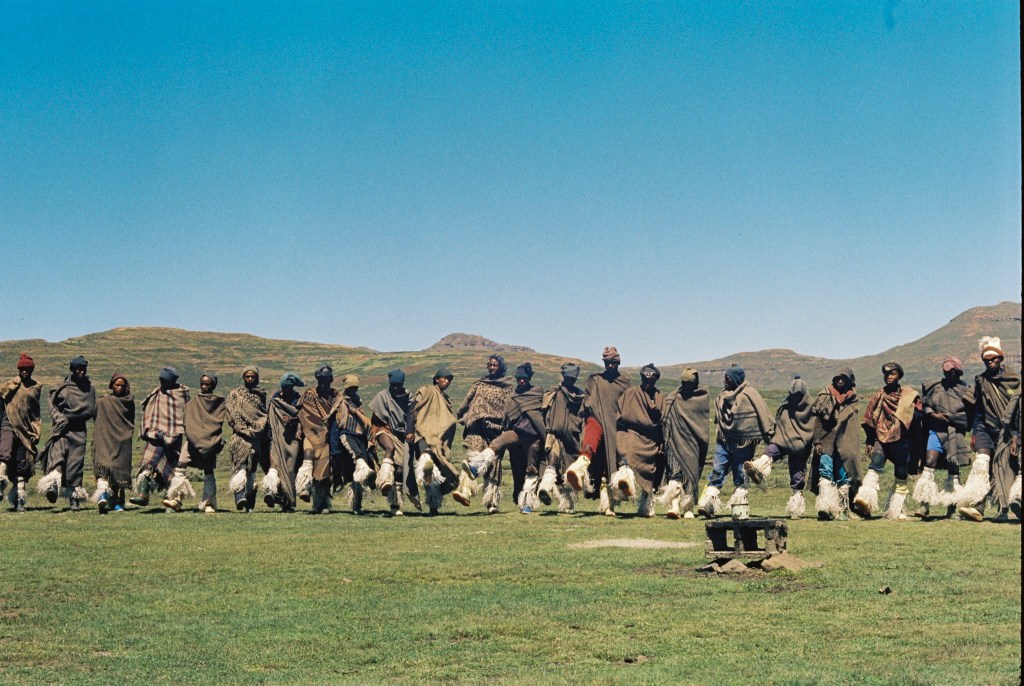
The trail follows the contours of foothills which skirt a river up towards a beautiful waterfall with a deep pool at its base. After two or so hours of walking we arrived at this pool and were flooded with gratitude that we’d persisted. What a stunning part of the world. We also had the entire reserve, seemingly to ourselves and parked off for a packed lunch and a quick plunge into the frigid pool. We hung around for a while, but the wind picked up with some foreboding and the sky darkened again and so we marched back to the car. We cut our time in half on the way back as there was no debate over whether we should continue. We had not sat down in the car for more than a few seconds before the clouds burst and we were showered in crisp mountain rains. A little anxious about the effect this might have on the roads back towards Underberg we set off with all haste making it back in time to catch some sunset colours dancing in the sky although the actual sun was obscured by the clouds. That was our final night in the berg and the next day we set our sights on St Lucia.
While not quite as long as the trip from Addo it was a fair drive from the Berg to St Lucia and the rain hit us sporadically throughout the day too. We left seriously early as we had organized a bird walk that afternoon with St Lucia birding veteran Ian Ferreira. As we pulled into town however, he made the call to try the morning rather as the weather was a bit unpleasant for walking and so we decided to drive around Eastern Shores a little in the drizzly afternoon. Part of the Isimangaliso Wetland reserve, the Eastern Shores section of the park is beautiful. We saw an amazing array of birds and animals. What a wonderful afternoon it was cruising slowly up and down alongside Lake St Lucia. That evening we had a wonderful seafood dinner in town before gently rolling around in steady rain looking for some roaming hippos. Just as we decided to call it a night we came upon one. Strolling uncaring down the middle of the road, there was an enormous hippo. I’d never seen one out of the water so close and the sheer size of the thing was baffling. After following him through the town he led us almost to our front door and so we turned in.
Next morning we met up with Ian and followed him through the forest trails on the edge of town. What an incredibly knowledgeable man. He showed us some seriously special birds and many that are only really found in St Lucia. Green Twinspot, Livingston’s Turaco, Woodward’s Batis, and Narina Trogon were among the highlights. The most interesting sighting however, was the Buff-spotted Flufftail. We sat down in the bush behind Ian who them imitated the Flufftail’s call. After some time, Caity spotted the little bird approaching us cautiously. It stuck to the shadows but could not help but investigate the origin of the call and stuck around for a long while allowing us amazing views of the little fella. I hadn’t taken my camera on the walk due to the weather and although it was nice to just observe I couldn’t help but wish I’d had it on hand as the flufftail posed so beautifully nearby. After the walk we grabbed our bags and returned to Eastern shores for another burn, this time up to Cape Vidal. We hoped to catch a Pygmy Goose and a Rosy Throated Longclaw. Unlucky on both counts we still had a wonderful afternoon before setting off to Manyoni Private Reserve and Bayete Private.
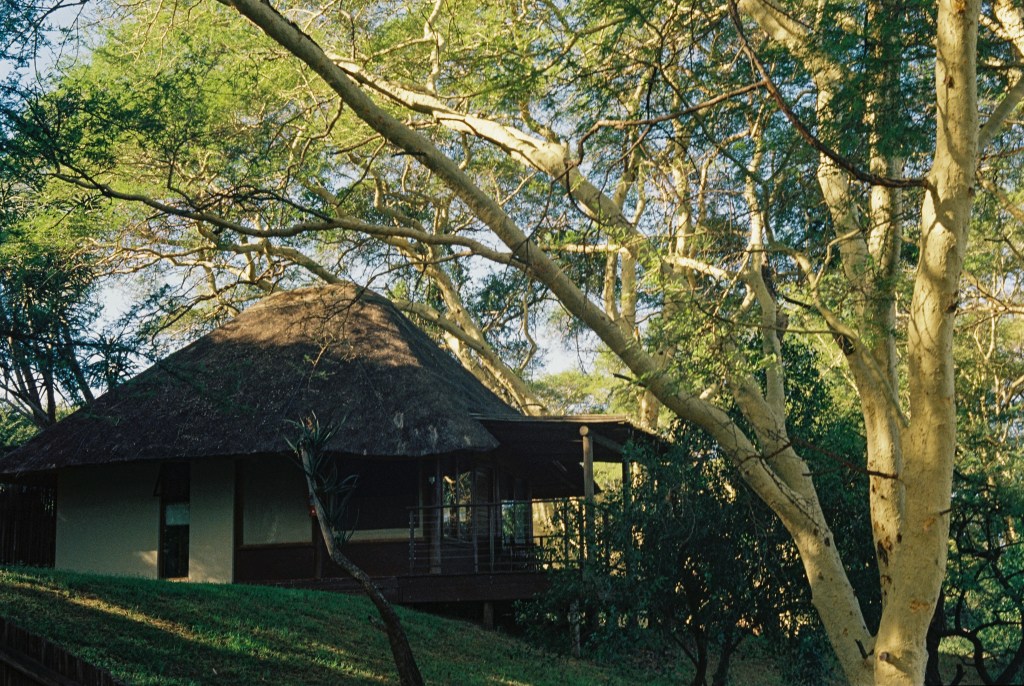
Arriving at the gate of Manyoni we were met by Louise, our guide, and she led us to the camp. She had no trouble in her safari kitted Land Cruiser but the same cannot be said for the poor swift which simply did not have the clearance required to navigate the highly eroded tracks. After a few bumps and scrapes underneath we made it to camp however and met Tristan, Louise’s husband. The two of them had gotten married on the same day as us coincidentally. The pair of them were so sweet and they showed us around and chatted about birds and the like. We then settled in and gazed over the dam which the camp overlooks. Kingfishers darted back and forth as Herons stood sentry and crocodiles cruised slowly below. What a magnificent scene to drink a beer to.
Our first drive was an epic one. We found lots of general game before coming upon a huge male lion as the sun was getting low on the horizon. This immense specimen had just been brought to the reserve from the Khalari and so, unlike his KZN cousins, he boasted a massive black mane. Incredibly, he began calling as we drew close and the reverberations of his roars seemed to shake the earth. I have never been anywhere near as close to a calling lion and it is an experience second to none. Arriving home that night we were greeted with an absolute feast. Two enormous fillets were presented to us with a sauce that I have thought about regularly since. My satisfaction was doubled by the fact that Caity could not get halfway through her portion and so my dinner grew substantially. Barely able to move afterward we lapsed into a food coma that lasted until the morning drive.
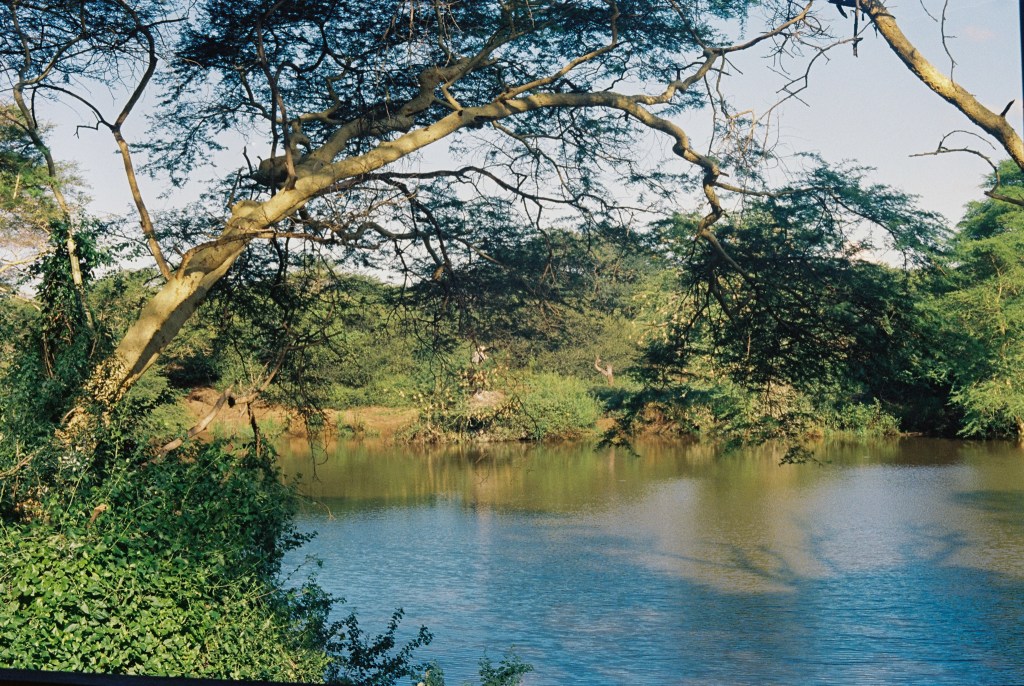
That morning drive was one for the ages. Before too long we had bumped into a mating pair of lions. This male was of a KZN family and therefore had a much shorter mane. Not twenty minutes after leaving the pair we came upon a mother cheetah and her two cubs. An unbelievably sweet sighting. It also broke a lengthy dry spell for me in terms of cheetah sightings. We stopped for a ‘rangers’ coffee’ which is a potent mix of coffee, Amarula, and condensed milk. A very special beverage indeed. Shortly thereafter we encountered another cheetah, this time a male with heavily distended stomach from a recent meal. He was posted up in the shade of a tree on the banks of a small waterhole. Without warning he became agitated and began hissing at the water. We soon spotted the source of his angst, a small crocodile around the size of my arm. The two locked eyes and the cheetah hissed furiously glaring all the while at the indifferent reptile. An amazing encounter to witness.
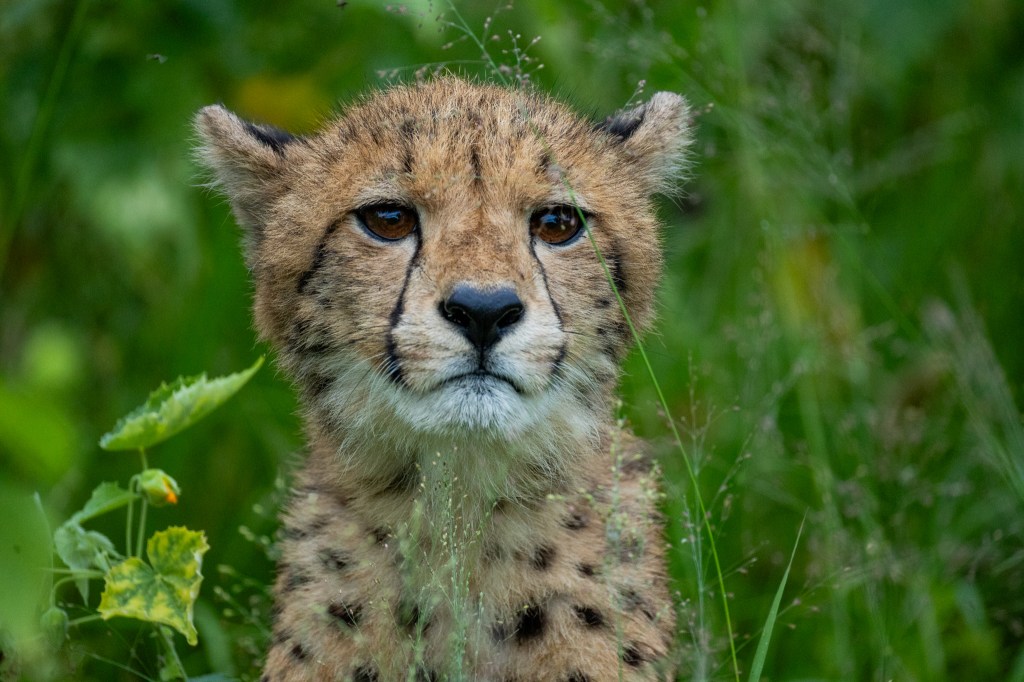
We returned for lunch before heading off to the ‘elephant experience.’ Bayete is home to two full-grown elephants that were reared by humans and so are unable to live independently. They still roam the reserve freely although they are accompanied by a ranger each and spend their nights in a shelter. Quite a pampered existence by the seems of things. Anyway, guests at Bayete get the opportunity to interact with these animals who are named Rambo and Rachel. Rambo is an absolute giant and has long tusks which just about touch the ground and cross each other on the way down. He is also a gentle fella and allows people to get up close and touch and feed him. Rachel on the other hand is a complete grouch, and more caution is required although she happily takes any food that is offered her. The experience was exceptional and I have no doubt that I will never get that close to an elephant again, at least safely.
That afternoon our drive began on a comical note. As we drove along a sandy road Louis’ attention was straight down beside the vehicle where she had picked up lion tracks. All eyes were on the prints as we crept forward. Only one passenger had the visionary sense to look forward. “These are very fresh,” she called to which the visionary replied, “yes they are in the road up ahead” at which point Louis looked up to see the lions we had all been tracking. Very fresh tracks indeed. We continued a lucky streak that evening and found the mating pair of lions again before finding group of rhinos. One proved to be much more skittish than its peers and turned out to be a black rhino, bringing our total for the trip to three which is unprecedented. It was a wonderful evening, and we watched the full moon rise as we enjoyed some sundowners in the bush before heading back to camp for dinner. Our final morning drive was a good one up to the north of the reserve. We passed through some beautiful woodland quite different to the landscapes of the south and saw a great variety of birds. All too soon we were packed up again and off to Tembe Elephant Park.
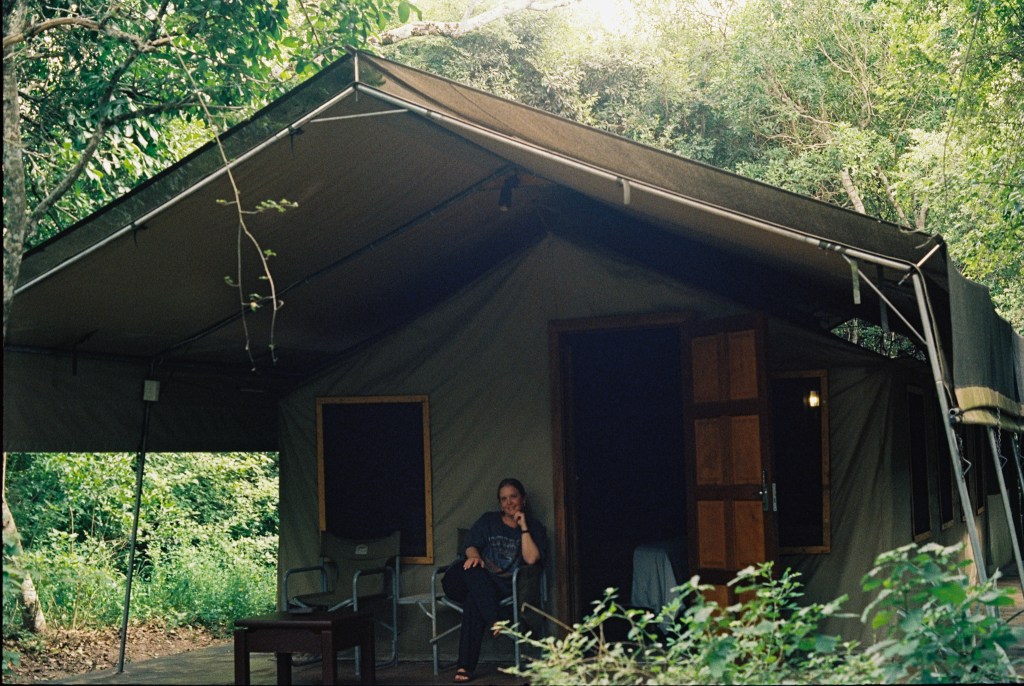
As we arrived, we were shown to our tent and introduced to our guide Nati, who turned out to be an absolute legend. We set out on our first drive and Nati regaled us with tales of the Zululand sand forests. From a childhood of snaring wild birds to the Zulu cattle herding communication networks inscribed on trees, he was a wealth of information and was clearly deeply connected to that part of the world. Our first few drives were great although several of the vehicle’s occupants were not at all interested in birds and so we drove rather quickly and saw much of the reserve. While it was a privilege to see so much of the area, our game sightings were not all that plentiful, and the non-birders seemed frustrated at the results. Regardless it was fantastic to be out in that environment which is so different to the bush that I am used to in the lowveld. Returning to camp we enjoyed a sublime dinner before turning in.
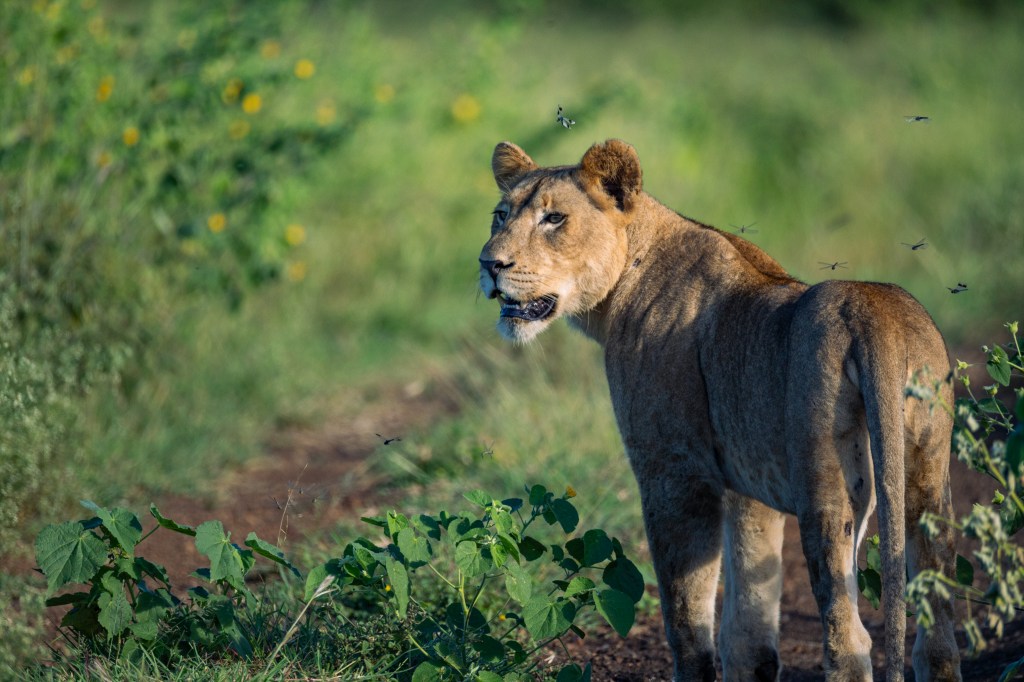
Next morning we again set off at pace to try and cram as many animal sightings into the drive as possible and again were not really rewarded. Returning to camp we enjoyed a massage that was a wedding present and while I allegedly snored loudly throughout, I enjoyed it thoroughly. It was such a deeply relaxing experience enhanced by the patter of gentle rainfall on the tent and the hooting of playful monkeys all around. It was however a little off putting to roll over and make eye contact with a giant golden orb spider right above my head. The afternoon drive went the same way as the morning, and we did not see a great deal of animals apart from some faraway (for Tembe) elephants and some great birds from a hide. The next morning was the final drive for the non-birding crowd and while we had some good elephant sightings the emphasis was again on getting a great distance up to an observation tower. The view was stunning and the border with Mozambique could clearly be seen, not too far away.
After lunch the evening drive commenced, and the vehicle was now three people lighter. With some trepidation the remaining family of four asked us if we might be interested in slowing down and looking out for birds. We were, of course, delighted with this suggestion and so the idea was passed along to Nati who happily obliged. Immediately the experience changed, we saw far more and had some incredible bird sightings including a Pink-throated Twinspot couple, Eastern Nicator, and Black Cuckooshrike. An epic drive for sure. It was amazing how the different approach changed the quality of the drives and we were so lucky with animals in addition to the plentiful birds. We even managed to find the only male lion in the entire park on our final morning drive. Upon returning to camp, we were told offhandedly that a huge male leopard had spent the morning sauntering around camp and we should keep an eye out. Grateful for the four days of bliss in the sand forest and for the fact that we had avoided a mauling we headed out the gates for our final destination of the trip, Hhuluwe/Mfolozi reserve.
The drive was not too long and after a quick stop in Hhuluwe town to replenish our stocks we entered the park through Memorial gate and began the drive South towards Mpila camp, where we would be staying. From the rolling hills and grasslands of the North through the changing landscapes and into the savanna and thickets of the South it was a spectacularly beautiful drive down the reserve and a real homecoming for us as we had visited Mpila right before our departure to Vietnam two years previously. We saw rhinos and elephants on the drive and much general game before winding into Mpila. Here we met with our first and only hiccup of the entire odyssey, our booking was for the wrong dates and the camp was full. Taking this news in stride, we asked what could be down to remedy the situation and in fact were very lucky to be relocated down the road to Nselweni camp which featured an incredible view of the Black Mfolozi river. In retrospect it is rather miraculous that the only real issue we encountered over the entire month of continuous travel was this little snag that was almost immediately resolved.
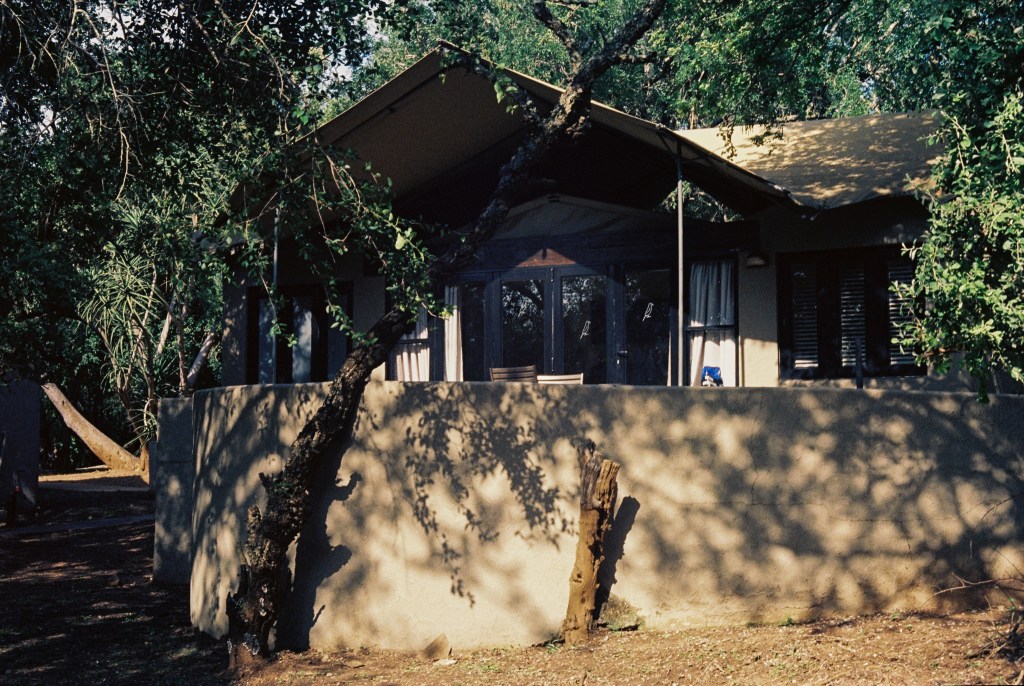
Arriving at Nselweni right at sunset we were greeted by a massive bushpig strolling around like he owned the place in the last of the light. Being careful to navigate to our bungalow with as much space as possible between us and the hog we made it and enjoyed a gin and tonic looking into the deep bush which separated us from the river. For the next two days we cruised leisurely around the reserve in the swift desperately trying to stretch each minute into an hour. We were lucky with birds, and I managed to hit 800 on my life list which I was rather pleased about. Our last night was spent next to a braai with gin and tonics at hand trying to absorb the essence of the bush as much as possible. As with all great things, our honeymoon came to an end and after a month on the road that we will never forget, it was finally time to head back to daily life with hearts full and memories aplenty.
Words and Photos by Grant O’Beirne
 There and Back Again
Leave a comment